
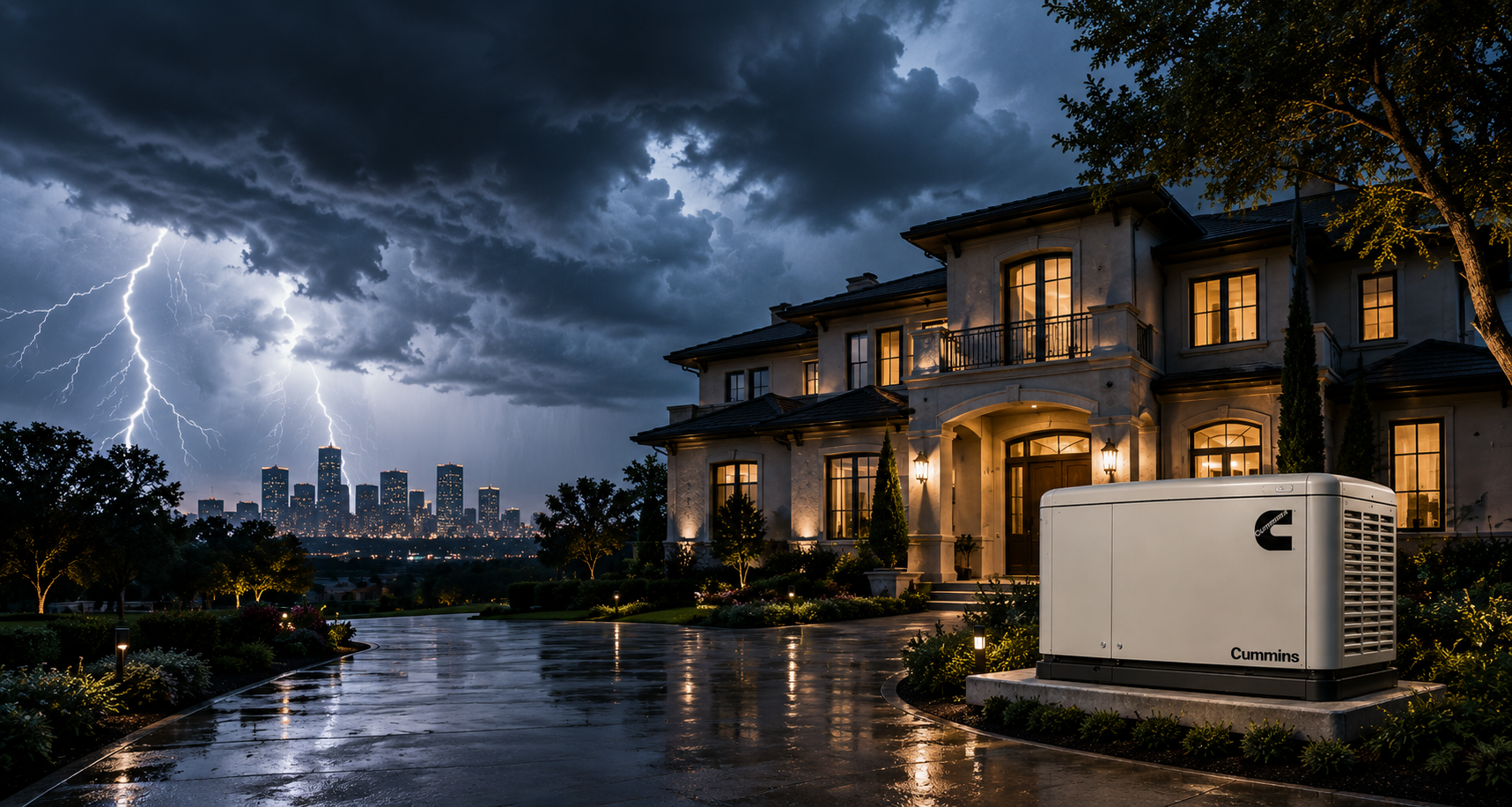
Between hurricanes, tropical storms, severe thunderstorms, high winds, extreme heat, and grid strain, Houston homeowners know how quickly life can change when the power goes out.
For owners of large homes and luxury properties, an outage can affect far more than lights and refrigeration. It can disrupt air conditioning, security systems, gates, elevators, pool equipment, home offices, smart home systems, and the daily comfort of everyone in the home.
That is why generator installation should not be treated as a last-minute decision.
The best time to plan a standby generator installation is before the next major storm is in the forecast.
Before Demand Spikes
Storm Season Creates a Rush for Generator Installation
Every year, the same pattern happens across the Gulf Coast. The weather is quiet, homeowners put off generator decisions, and then a major storm appears in the forecast. Suddenly, everyone wants a standby generator at the same time.
The problem is that a quality generator installation cannot be rushed. A properly installed standby generator requires planning, load calculations, equipment selection, permitting, fuel supply review, electrical work, transfer switch installation, placement decisions,
and final testing.
Large Homes Need More
Large Homes Need More Than a Basic Backup Plan
For a smaller home, a standby generator may only need to support essential circuits.
For a luxury home, the goal is often different: keeping the home operating as normally as possible during an outage.
Multiple A/C Systems
Houston homes often need serious cooling capacity during summer outages.
Security & Gates
Keep cameras, access control, lighting, and motorized gates working.
Pool Equipment
Support pumps, outdoor systems, and luxury backyard infrastructure.
Home Offices
Protect internet, workstations, smart home systems, and communications.
Avoid Compromise
Waiting Too Long Can Limit Your Options
When storm season heats up, generator demand can rise quickly. That can affect more than installation timing. It can also affect which units are available, how soon crews can complete the work, and whether there is enough time to properly plan the installation.
Waiting too long may lead to:
- Choosing from limited generator inventory
- Accepting a rushed installation schedule
- Delaying the project until after storm season
- Settling for a smaller system than the home really needs
- Overlooking important placement or fuel-supply details
A standby generator is a long-term investment. It should be selected carefully,not purchased in a panic.
Smart Planning
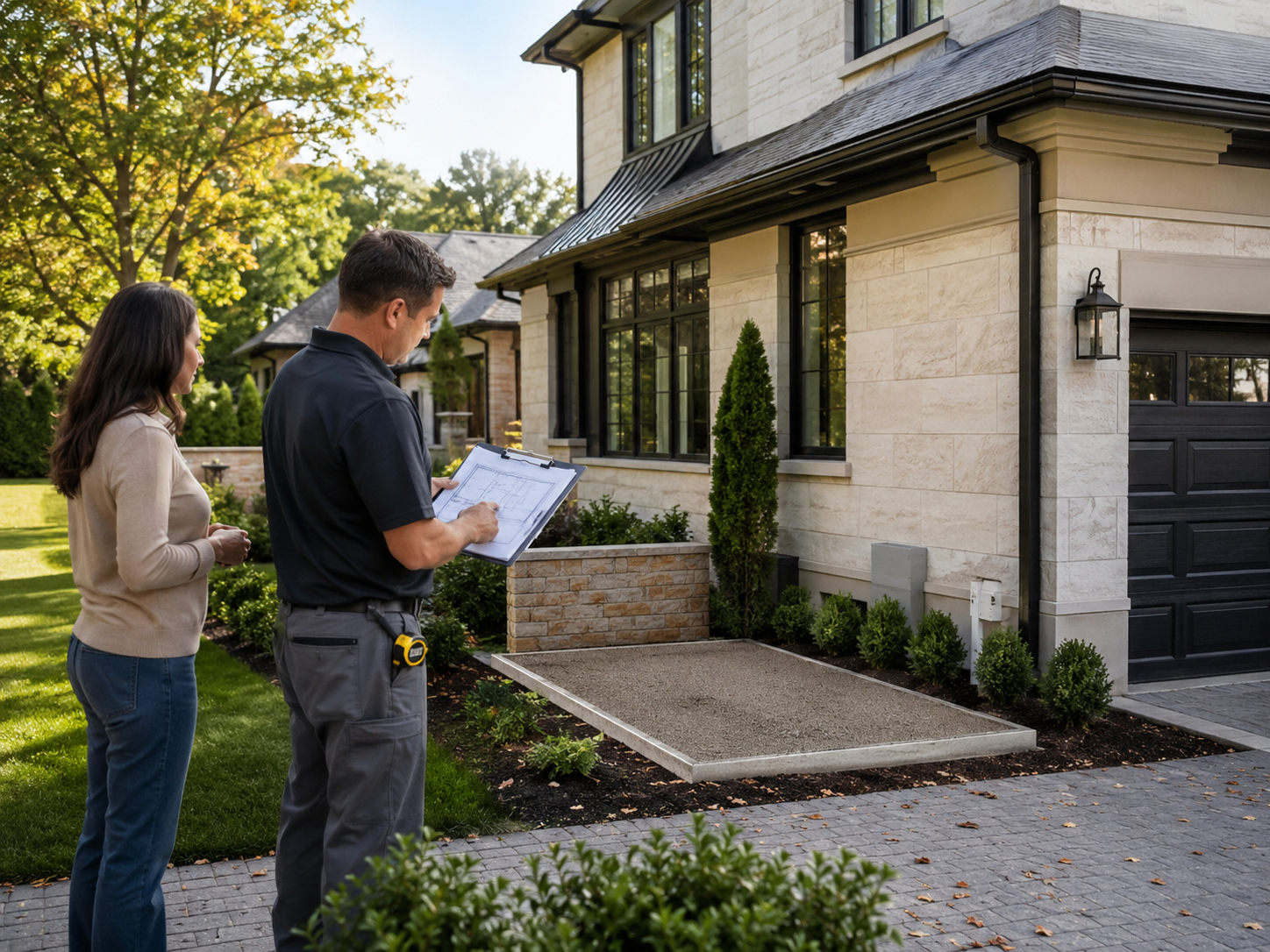
Generator Placement Takes Planning
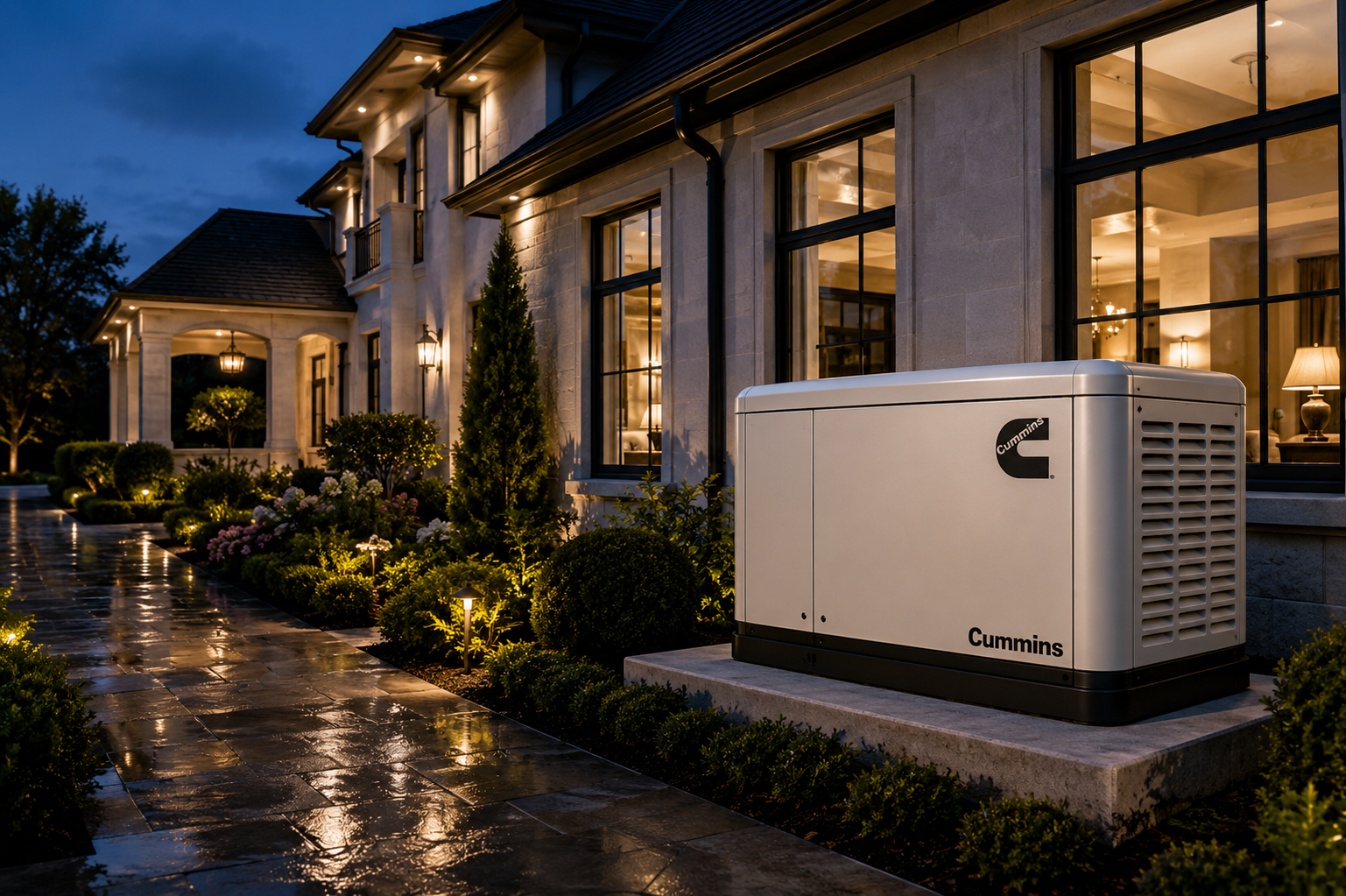
One of the most important parts of a generator installation is deciding where the unit should go.
For luxury homes, placement is not just a technical issue. It also affects appearance, sound,
landscaping, access, and long-term serviceability.
Fuel Supply Matters
Fuel Supply Should Be Reviewed Early
A standby generator is only as dependable as the fuel source behind it.
Many Houston-area homes use natural gas, while some properties may rely on propane.
Either way, fuel supply must be reviewed before installation.
Large homes with high-capacity generators may require gas line upgrades or a closer look
at whether the existing fuel system can support the generator under load. This is especially
important for homes with multiple gas appliances, outdoor kitchens, pool heaters,
or other systems already using natural gas.
Whole-Home Protection
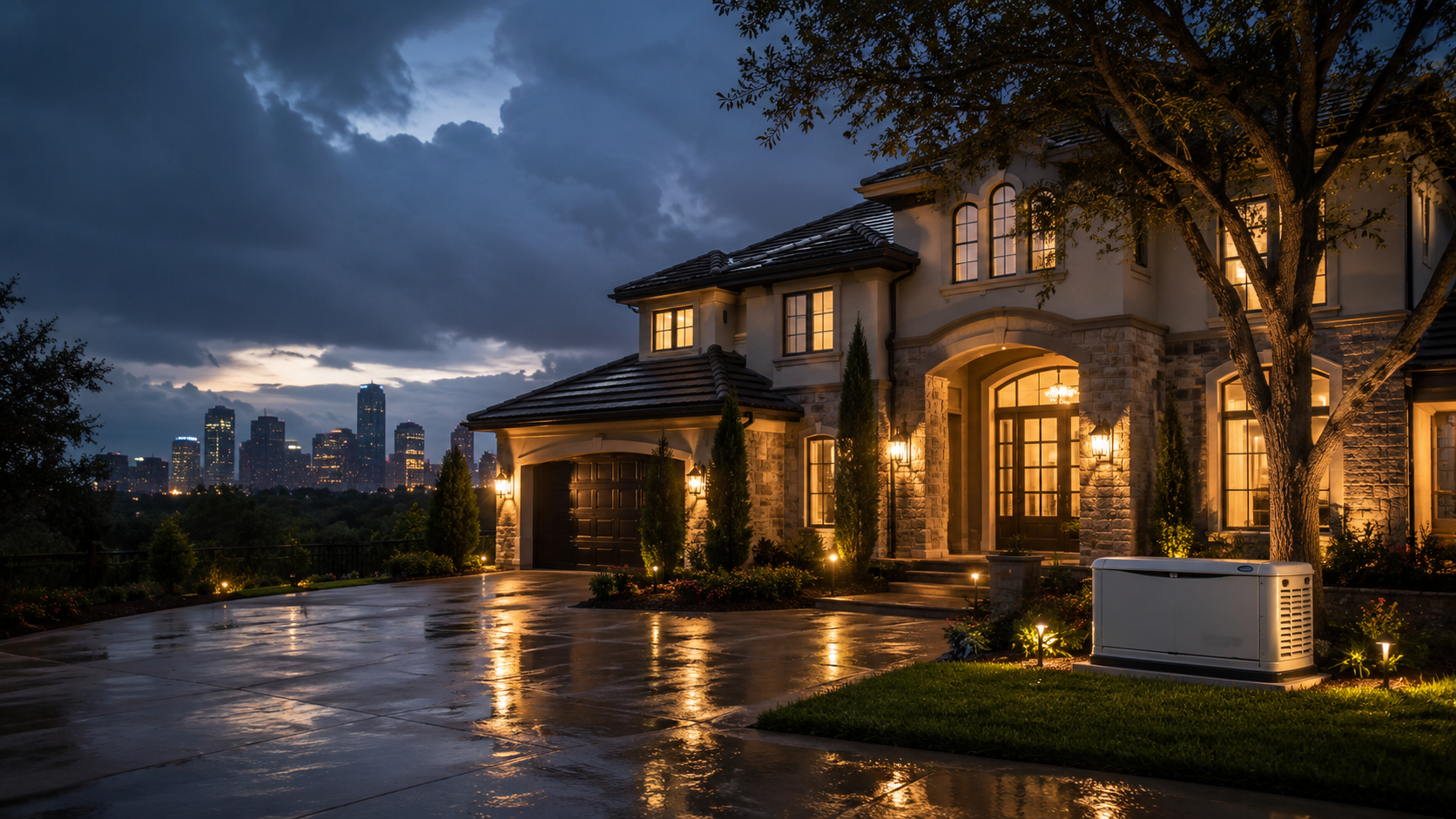
A Standby Generator Protects More Than Comfort
Recommended for Large Homes
Why Cummins Is a Strong Choice for Large Houston Homes
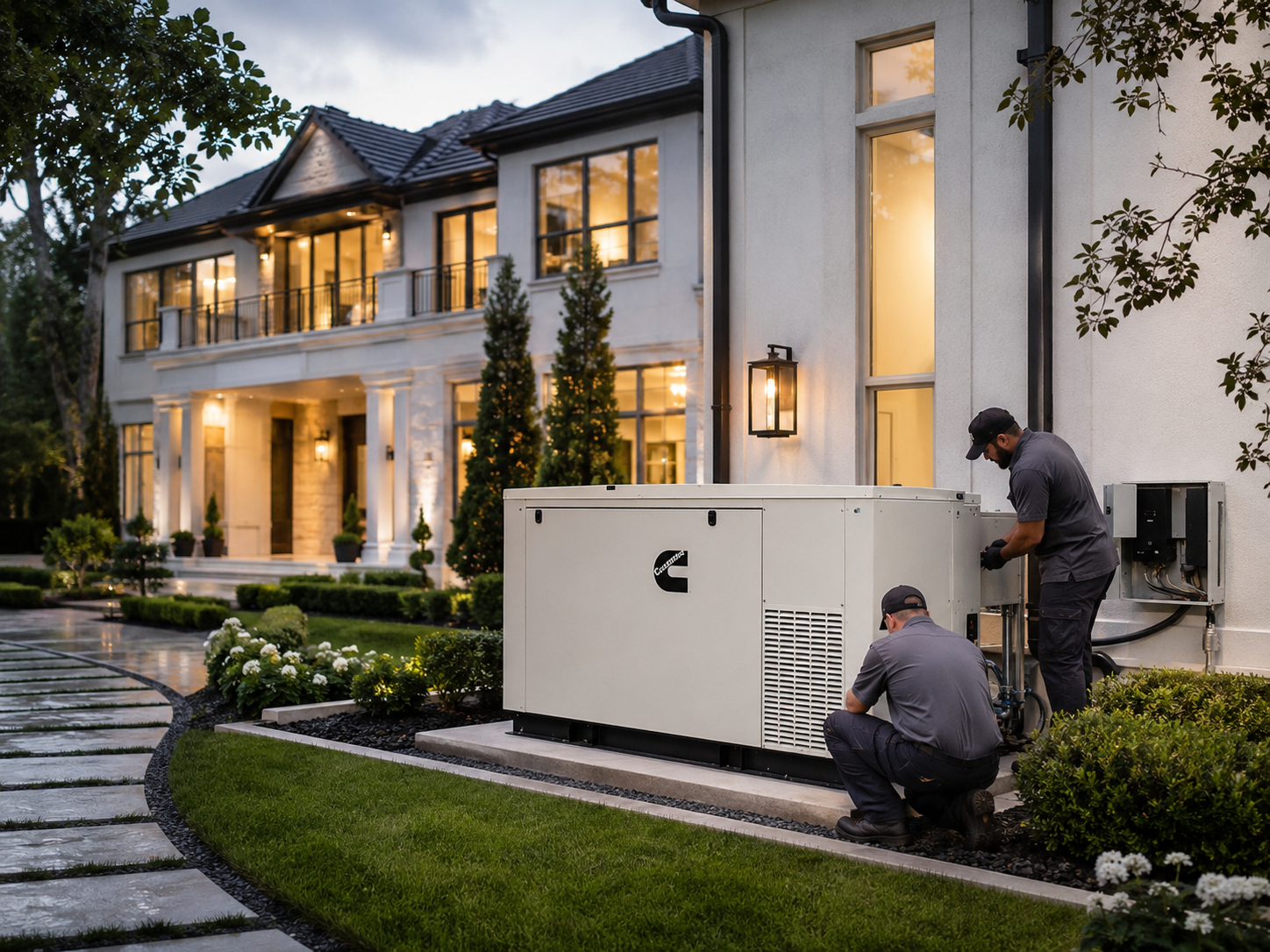
For many larger homes and luxury properties, Summit Generators often recommends Cummins standby generators. Cummins is known for serious power-generation experience, and its residential standby systems are well suited for homeowners who need more than a basic backup setup.
Quiet operation for residential settings
Strong engineering and reliability
Whole-home backup capability
Plan Early
Early Installation Helps Avoid Storm-Season Stress
Planning generator installation ahead of the next major storm gives homeowners more control.
Instead of reacting to a forecast, you can make decisions carefully.
01
Home Load Assessment
Review the property’s actual power needs and priority systems.
02
Generator Sizing
Select the right capacity for comfort, safety, and whole-home function.
03
Placement & Fuel Review
Plan location, gas supply, code requirements, and long-term access.
04
Installation & Testing
Complete the installation before demand peaks and storms approach.
Protect Your Home Before the Next Outage
The Right Time to Prepare Is Before the Forecast Changes
Summit Generators specializes in generator sales and installation for large homes,
luxury properties, and homeowners who expect more from their backup-power solution.